

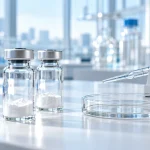
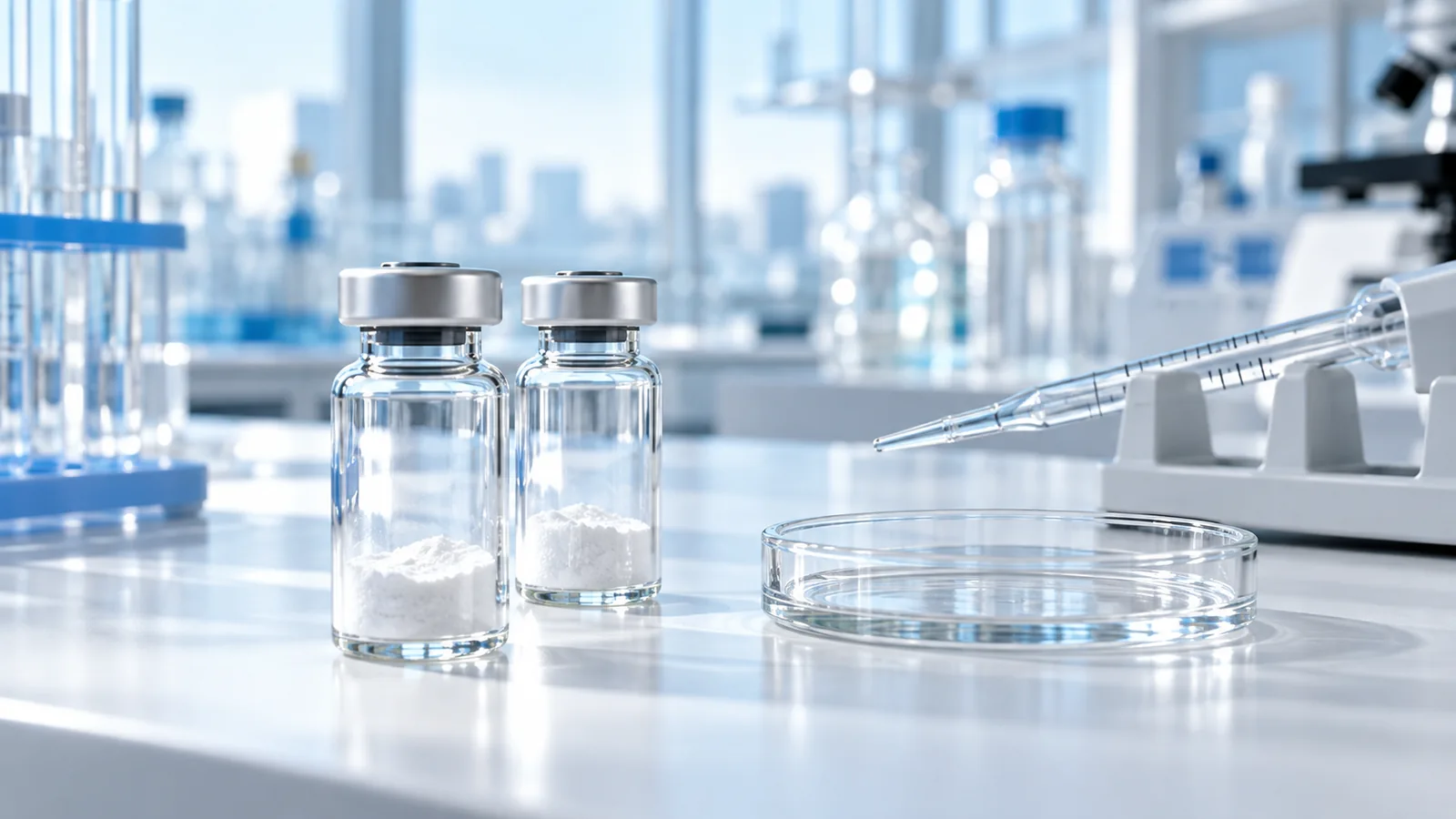

Most research peptides ship as lyophilized powder, not a ready-to-use solution. Freeze-drying removes water and extends shelf life, but that powder still has to go back into solution before most laboratory work can start.
That return to solution is reconstitution: dissolving the peptide in a compatible liquid at a known concentration. The process sounds simple on paper. In practice, solvent choice, pH, temperature, and concentration all affect how well a peptide dissolves and how stable it stays afterward.
There’s no single method for how to reconstitute peptides that applies to every compound. Two questions decide the approach: which solvent or buffer is compatible with the peptide and the planned assay, and what final concentration the protocol requires.
Before handling the material, confirm the vial, batch information, and analytical documentation match what the experiment expects. Certified-Pep Solutions’ guide to how to read a peptide certificate of analysis covers what those records can establish.
What Is Peptide Reconstitution?
Peptide reconstitution is the process of dissolving lyophilized peptide material in a compatible solvent or buffer to produce a solution of known concentration.
Peptides are commonly freeze-dried because it improves stability and simplifies storage compared to keeping them in solution. That doesn’t make lyophilized material indefinitely stable. Shelf life still depends on the sequence, formulation, moisture exposure, temperature, and packaging.
Solubility varies substantially from one peptide to another, so the reconstitution method can change from one compound to the next. A method that works well for one sequence can fail completely for another.
What Should Researchers Check Before Reconstituting a Peptide?
The vial label tells a researcher how much material is present. It doesn’t determine which solvent to use or what concentration an experiment requires. Those decisions come from the assay method, the peptide’s chemistry, and a validated laboratory procedure.
Before reconstituting, confirm the following:
- Peptide identity and batch or lot information
- Supplied mass
- Validated protocol or assay method
- Solvent compatibility
- Target final concentration
- Storage requirements, including light or temperature sensitivity if documented
If a supplier document conflicts with an established assay protocol, resolve the discrepancy before preparing the sample. Those checks should come before solvent selection.
What Is Bacteriostatic Water?
Bacteriostatic water is sterile water formulated with benzyl alcohol as an antimicrobial preservative. As stated in the DailyMed information for Bacteriostatic Water for Injection, USP, commonly supplied formulations contain benzyl alcohol and come in multiple-dose containers.
The preservative is what separates bacteriostatic water from preservative-free sterile water. That difference does not make it suitable for every research peptide, though. Diluent choice still depends on the peptide, solvent compatibility, and the laboratory method being used.
Is Bacteriostatic Water Always the Right Diluent for Peptides?
No. There’s no universal solvent that works for every peptide.
Solubility depends on amino-acid composition, net charge, pH, concentration, and the solvent system used. Peptide charge and hydrophobicity can change which solvent conditions support dissolution. A handling guidance for peptides describes different approaches for acidic, basic, and poorly water-soluble sequences. Solvent selection should follow compound-specific data or a validated method, not a fixed rule.
That variation is exactly what gets lost in casual guidance on how to mix peptides with bacteriostatic water. Compatibility with the specific peptide and the experimental method has to be confirmed first. Bacteriostatic water is one possible aqueous diluent, not a default that applies to lyophilized material generally.
Bacteriostatic Water vs Sterile Water: What Is the Difference?
The main difference is the preservative. Bacteriostatic Water for Injection contains benzyl alcohol as a bacteriostatic preservative and is supplied in a multiple-dose container. By comparison, Sterile Water for Injection, USP contains no bacteriostat, antimicrobial agent, or added buffer and is supplied as a single-dose preparation.
| Diluent | Preservative | Container | Research Consideration |
| Bacteriostatic Water for Injection, USP | Benzyl alcohol (~0.9%) | Multiple-dose container | Compatibility with the peptide and experiment still needs confirming |
| Sterile Water for Injection, USP | None | Single-dose preparation | No antimicrobial preservative is present |
| Other buffers or solvents | Depends on formulation | Method-dependent | Some sequences require different pH or solvent conditions |
Neither bacteriostatic water nor sterile water is automatically the correct choice for every peptide. Solvent selection should follow the peptide’s documented solubility requirements and the validated laboratory method.
How to Reconstitute Research Peptides in the Laboratory
The sequence below moves from reviewing the method to storing the finished solution, in the order most laboratories follow.
Step 1: Review the Peptide and the Experimental Method
Confirm compound identity, labeled mass, batch information, the assay protocol, the permitted solvent or buffer, target concentration, and storage method before opening anything. The method should drive the preparation, not a number found online.
Step 2: Let the Material Equilibrate Before Opening
Allowing lyophilized material to reach room temperature before opening reduces moisture uptake from condensation, a step consistent with guidance on peptide handling and storage. Skip a fixed waiting time unless the validated method specifies one.
Step 3: Select a Compatible Diluent
Use the solvent or buffer the validated method specifies. Bacteriostatic water may fit some protocols, while other peptides need different aqueous conditions, adjusted pH, buffer systems, or an organic solvent. Swapping solvents isn’t interchangeable without checking that the peptide still behaves as expected.
Step 4: Calculate the Required Concentration
Work out concentration before adding any liquid, using peptide mass divided by final solution volume.
Step 5: Add the Diluent With Suitable Laboratory Technique
Use clean or sterile equipment appropriate to the experiment, and introduce the liquid in a controlled way that avoids unnecessary sample loss.
Step 6: Allow the Peptide to Dissolve
Mixing method depends on the peptide and the validated protocol. Not every peptide should be shaken or vortexed, since agitation, interfaces, temperature, and concentration can all affect stability. If dissolution looks incomplete, check solvent compatibility again rather than just mixing harder.
Step 7: Record the Prepared Solution
Standard documentation should include peptide identity, batch or lot, solvent used, final concentration, preparation date, and storage condition.
Step 8: Store According to a Validated Method
There’s no single storage temperature or window that fits every peptide. Storage depends on the peptide itself, concentration, solvent, pH, light exposure, and what the experiment requires. Where applicable, minimize repeated freeze-thaw cycling, since it can affect stability.
How Do Researchers Calculate Peptide Reconstitution Concentration?
The resulting concentration comes from a simple relationship:
Concentration = peptide mass ÷ final solution volume
Increasing the final volume lowers concentration. Reducing it raises concentration. The same vial of material can therefore be prepared at different concentrations depending on what the experimental method calls for.
The correct number comes from the protocol, not from a universal ratio circulating online.
What Should a Peptide Reconstitution Calculator Calculate?
For laboratory work, the calculator only needs peptide mass, final solution volume, and the desired concentration unit. The resulting value should remain a mass-per-volume concentration, with unit conversion where useful.
Without one, the formula above works just as directly: mass divided by final volume.
Why Can Peptide Solubility Become a Problem During Reconstitution?
A vial with the correct labeled mass doesn’t guarantee complete dissolution in every solvent.
Amino-acid composition, net charge, pH, solvent polarity, concentration, and hydrophobic stretches in the sequence all play a role. Acidic, basic, and hydrophobic peptides can each need different solvent conditions to dissolve fully. Peptides containing tryptophan, methionine, or cysteine are also more prone to oxidation in solution, a pattern noted in the same peptide handling guidance cited above.
Improvised solvent mixes aren’t a substitute for compound-specific solubility data or a validated method. When dissolution is incomplete, that’s a solvent-compatibility question first.
What Happens to Peptide Stability After Reconstitution?
There’s no single number for how long a reconstituted peptide stays usable.
Once a peptide enters aqueous solution, new degradation pathways become relevant. A review of peptide stability in aqueous solution points to pH, solvent conditions, temperature, oxidation, and concentration as key variables. The realistic storage window has to come from data on the specific compound or a validated method, not a general rule of thumb.
Where validated stability data supports frozen storage, aliquoting can reduce repeated freeze-thaw exposure.
Common Peptide Reconstitution Errors in Laboratory Work
A small set of recurring mistakes accounts for most reconstitution problems in practice:
- Assuming every peptide uses the same solvent
- Calculating concentration from added liquid without confirming the final volume
- Ignoring compound-specific solubility data
- Exposing moisture-sensitive lyophilized material longer than necessary
- Using aggressive mixing without confirming the peptide tolerates it
- Changing storage temperature repeatedly
- Failing to document solvent and concentration
- Assuming a clear solution proves chemical stability
Visual clarity alone cannot establish identity, purity, or chemical stability.
Reconstitution Does Not Replace Analytical Verification
A preparation method and an analytical report answer different questions. Reconstitution shows how the material went into solution. It says nothing about whether that material matched its claimed identity or purity in the first place.
A peptide certificate of analysis addresses that separately, through identity, purity, and content testing rather than preparation technique.
Where to Buy Bacteriostatic Water for Peptides
Product documentation matters when sourcing bacteriostatic water for laboratory work. Before ordering, confirm a few things about the supplier and the product itself:
- The product is clearly identified, with labeled composition
- Lot or batch traceability is available
- Packaging is intact and storage information is provided
- Supporting documentation is available where offered
- The product suits the intended research method
Researchers sourcing peptide-handling supplies can review Certified-Pep Solutions’ current BAC Water listings alongside its other laboratory research products.
Laboratory Handling and Regulatory Status Are Separate Questions
A laboratory preparation method does not determine a research compound’s regulatory status. Those are separate questions. Certified-Pep Solutions covers the regulatory side in its guide to the regulatory status of research peptides, worth reading alongside any laboratory handling procedure.
Frequently Asked Questions
What is peptide reconstitution?
Peptide reconstitution is the process of dissolving lyophilized research peptide material in a compatible solvent or buffer. The resulting concentration depends on peptide mass and final solution volume.
Is bacteriostatic water always used to reconstitute peptides?
No. Bacteriostatic water may suit some preparations, but peptide solubility depends on sequence, pH, concentration, and solvent conditions. Researchers should follow a validated method for the specific peptide and assay.
What is bacteriostatic water?
Bacteriostatic water is sterile water containing benzyl alcohol as an antimicrobial preservative. USP Bacteriostatic Water for Injection typically contains 0.9% benzyl alcohol and comes in a multiple-dose container.
What is the difference between bacteriostatic water and sterile water?
Bacteriostatic water contains an antimicrobial preservative, while Sterile Water for Injection contains none. Neither should be assumed appropriate for a specific peptide without checking the experimental method first.
How do researchers calculate peptide reconstitution concentration?
Researchers divide peptide mass by final solution volume to get concentration. The target number should come from the experimental protocol, not a universal ratio.
How long can a reconstituted peptide be stored?
There’s no single storage period that applies to every peptide. Stability after reconstitution depends on the peptide’s chemistry, solvent, pH, concentration, temperature, and other experimental conditions.
What should a peptide reconstitution calculator show?
A laboratory peptide reconstitution calculator should calculate concentration from peptide mass and final solution volume, with unit conversion where needed.
Where can researchers buy bacteriostatic water for peptides?
Researchers should buy bacteriostatic water from a supplier that clearly identifies the product and provides batch, packaging, and storage information. Compatibility with the planned laboratory method still needs separate confirmation.